Jacob Oller wrote an article for Paste Magazine titled Destroying Movies for Fun and Profit (9 February 2024).
« a deduction for a loss sustained upon the abandonment of property (reported on Form 4797). »
« This practice is back in the news because the powers that be at WB have gone back to their original decision regarding the hybrid live-action/animated Looney Tunes movie Coyote vs. Acme. Despite the film testing well and generating plenty of buyer interest, a team of execs who haven’t seen the finished movie look like they’re going to “unceremoniously delete it” for tax purposes. Sorry, filmmakers, but apparently it actually looks better to stockholders if WB doesn’t actually put movies out. “Hollywood accounting” has its reputation for a reason, but it’s never been so obviously broken. »
« It might seem like Warner Bros. Discovery CEO David Zaslav is a true innovator of idiocy, but the man behind the permanent shelving of movies like Batgirl and Scoob! Holiday Haunt is just ramping up a long tradition of burning art to save a quick buck. »
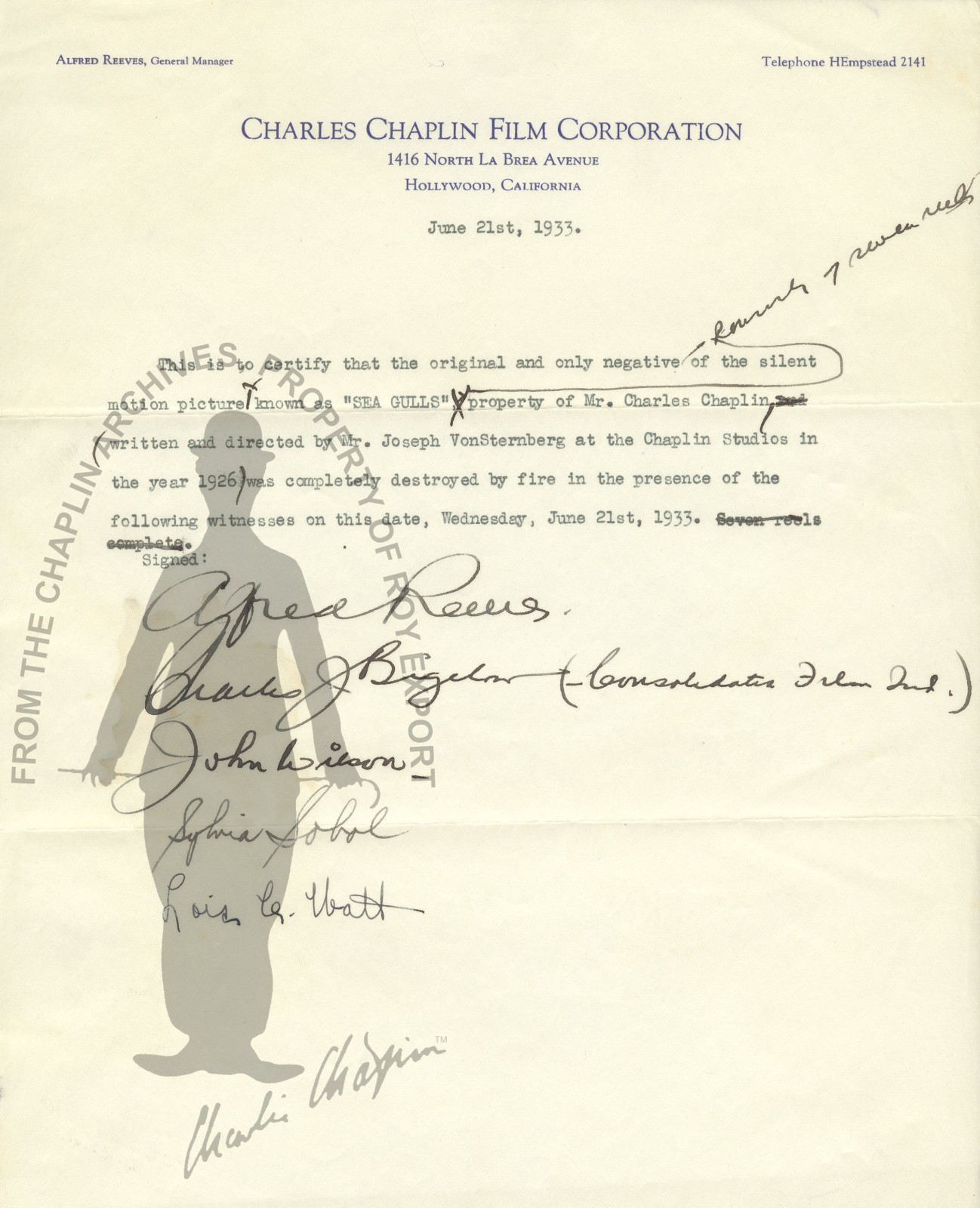
« Even more relevant is a case from almost 100 years ago: Charlie Chaplin literally torched the film negatives of A Woman of the Sea back in 1933, in front of multiple witnesses, so that he could claim the movie as a loss for tax purposes. »
« For example, if Disney keeps all of its movies and TV shows on Disney+, it has to pay residuals to the people who made them. They’ve also spread out the costs of a movie like Crater (which was available to watch for a mere seven weeks during the summer of 2023) over the years that the movie will ostensibly be available to the public and, therefore, creating value for Disney. Remove these movies and shows from the streamer, or better yet, remove them permanently (like Disney did with Crater), and their value can be added to an impairment charge—basically, a claim to the tax man that something a company owns has become, suddenly, worthless. »
« Disney recorded a $1.5 billion impairment charge last year. As Julia Rock points out, this means that Disney is claiming something pretty odd: Both “that the assets were producing so little value that it’s cheaper to destroy them than to keep them and that the assets were worth $1.5 billion.” »
« As an aside, the HBO Original Fahrenheit 451 is still streaming on Max. »
« “When intertwined with public funding through state and federal tax incentives, the practice of movie and television write-downs represents a troubling exploitation of taxpayer funds,” writes tax attorney Andrew Leahey. “Coupled with rapidly expanding state tax incentives, it represents a multibillion-dollar Rube Goldberg machine that culminates in a nickel being pulled from your pocket, strapped to an Acme rocket, and fired directly into the bank accounts of movie studios.” »
« Cooking the books has always been a Hollywood practice. Burning them is new. »

 Articles of Interest